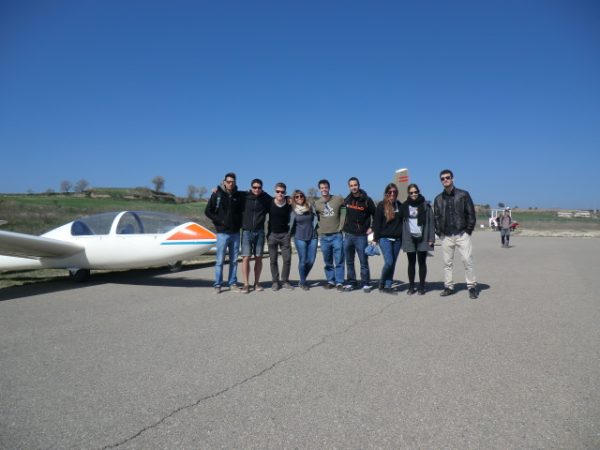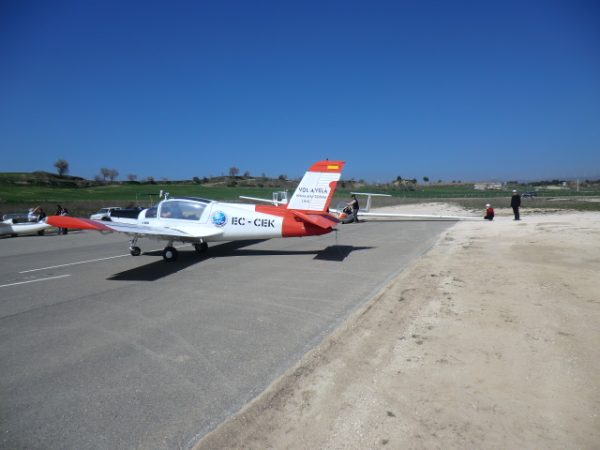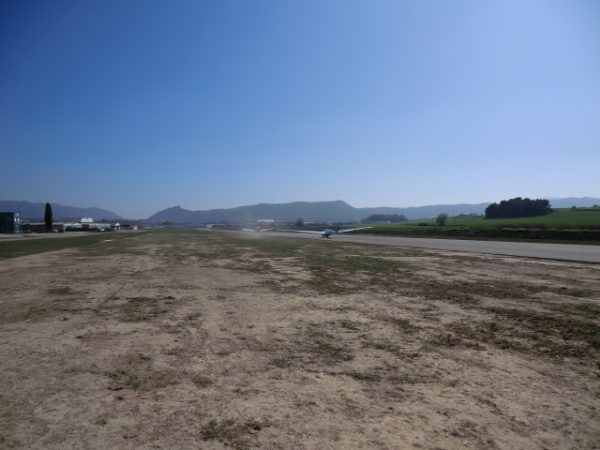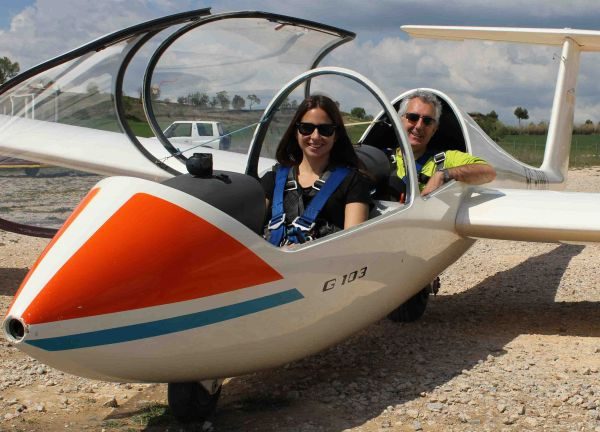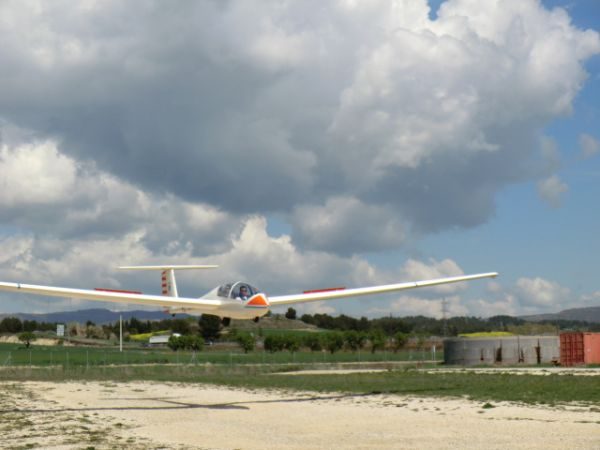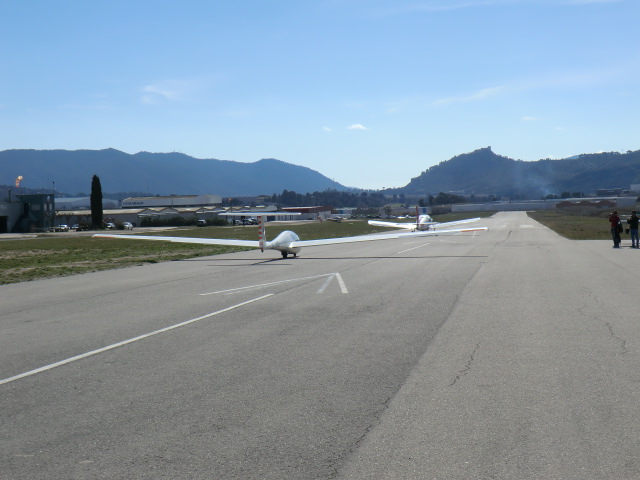
The course ‘Introduction to sailplanes’ is a pioneer in Catalonia and in Spain. Students fly without an engine at the Igualada aerodrome. They learn to assemble and dismantle the aircraft and take part in flight operations.
More than 50 students of the degrees in Industrial Technologies Engineering, Aerospace Engineering and Aerospace Vehicle Engineering, taught at the Terrassa School of Industrial and Aeronautical Engineering (ETSEIAT) of the Polytechnic University of Catalonia (UPC), have enrolled this term in the elective course “Introduction to sailplanes”, organised by the Department of Strength of Materials, with the collaboration of the Department of Graphic Expression, and designed by professor Rafael Weyler.
The elective course, taught in English, which students of the three degrees offered by ETSEIAT of the UPC have begun to take this term, allows enrolled students to make real flights in an engineless aircraft. This type of academic activity is common in German universities, through the so-called Akafliegs, but no other university in Spain does it.
The pioneer, both in Catalonia and across Spain, has been professor Rafael Weyler, of the UPC’s Department of Strength of Materials. Weyler has been a glider pilot since 2003 and proposed to ETSEIAT the creation of this course, initially planned for 20 students but which, due to demand, has been expanded to 54 places.
Direct learning
“It occurred to me to create the course because flying without an engine involves the most demanding practical knowledge, first-hand, of the daily life of pilots, who are ultimately the users of the technology that students will have to create, maintain and improve when they finish their studies. The best way is to experience for yourself what a pilot feels when flying driven only by rising currents and the force of gravity. The aim is for students to experience the aircraft from the inside, to gain direct sensations as engineers, from a more direct point of view”, the professor explains.
A change of perspective
For student Estela Bragado the course offers them “to experience and feel first-hand many aspects that we study throughout the degree”. In this regard, she adds: “We change perspective and focus it on that of the pilots, on the situations they experience in flight. Gliding is an unforgettable experience and a great opportunity to get to know a speciality with which we can enjoy the most natural and real flying”.
The students taking the course designed by Rafael Weyler fly on Sundays this term accompanied by the professor himself or by another pilot for approximately 30 minutes, at altitudes of between 500 and 1,000 metres. Each session costs students 60 €.
They also fly in variable weather conditions in order to experience flight in all its circumstances and to learn in a practical way, for example, about the problems posed by the wind that pilots must deal with.
The stall
On the other hand, the students learn a great deal of theory in class every day, on the blackboard, and even practise with simulators. “In this way”, Rafael Weyler explains, “they can understand, for example, the concept of the stall. Students know about it, but they don’t know what a pilot feels when facing a stall until they experience it”, Weyler continues. The stall is one of the manoeuvres practised during the flight. “By living the experience, the student better understands the real workings of an aircraft and will be able, in the future, to design devices that give advance warning of this kind of incident with full knowledge”, the professor stresses, “to solve a problem, you first have to understand it”.
In addition to the experience of gliding, the students taking “Introduction to sailplanes” learn to assemble an aircraft, which is part of the course. The gliders have to be rigged before each session and derigged after the day’s flying, which gives students direct knowledge of the structure and mechanisms of these sailplanes of the sky.
Assessment
To pass the assessment of this course, students must have taken part in rigging and derigging the aircraft, know how the aerodrome works, take an active part in flight operations and submit a written paper expressing their motivations and personal opinion about the experience. It is not compulsory to make the flight to pass the course, although it is a recommended experience.
(text taken from a news item on the website of the UPC’s Terrassa campus)
(Estudiants de l’ETSEIAT de la UPC volen a vela en l’assignatura ‘Introduction to sailplanes’)